



Crowdfunding has changed the relationship between inventors and consumers. Instead of persuading a traditional investor or a large manufacturer to invest in a product, creators could present an idea to thousands of potential customers.
The problem was that a successful crowdfunding campaign didn’t necessarily translate into a successful product. Some campaigns had huge delays, manufacturing problems, or simply failed to deliver what they promised backers.
But a few projects have shown that crowdfunding can work surprisingly well.
1. Pebble Smart Watch
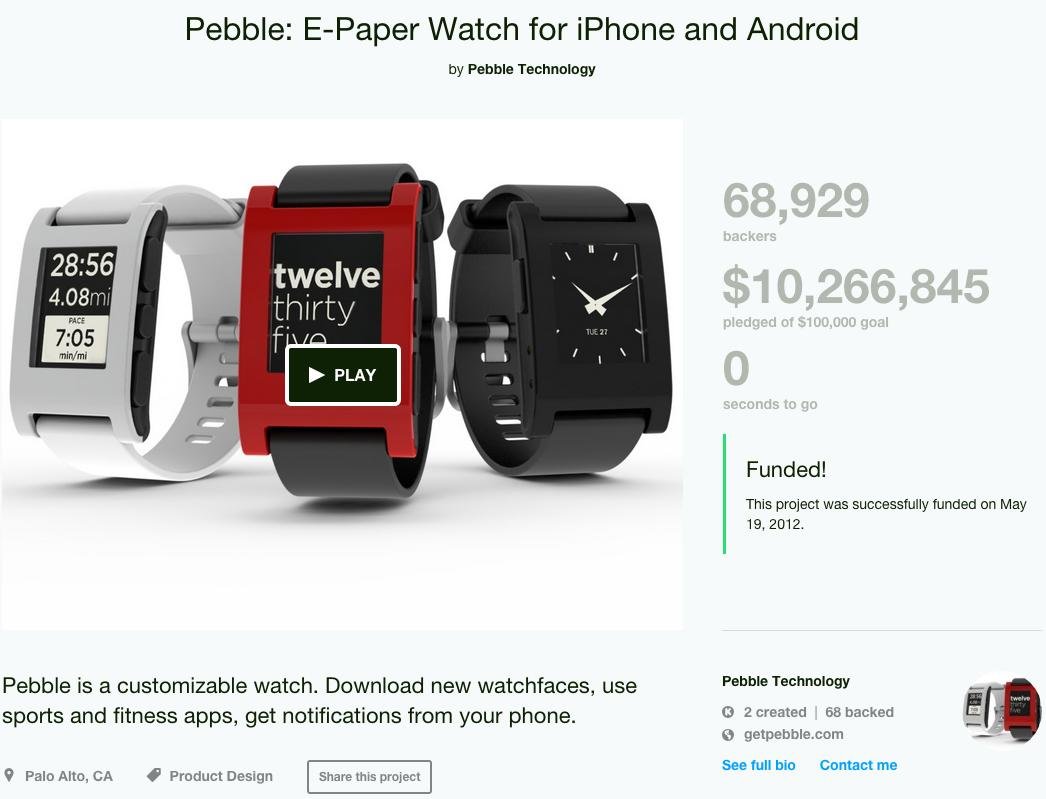
Pebble was one of the early crowdfunding success stories that characterized the era. It launched its 2012 Kickstarter campaign aiming for $100,000 but ended up raising about $10.3 million from just under 69,000 backers.
The watch had smartphone notifications, apps, and a power-saving display. Its relatively simple design and emphasis on battery life set it apart from the more ambitious smartwatches that came after.
2. Oculus Rift 3.
The Oculus Rift brought consumer VR back into the public conversation. The 2012 Kickstarter campaign was a $250,000 goal and raised about $2.44 million from 9,522 backers.
The project primarily targeted developers, but the buzz it created showed us that a lot of people were interested in immersive gaming technology.
3. Exploding Kittens
Not every crowdfunded project needs to be fancy tech to be a success.
The goal for Exploding Kittens, a card game by Elan Lee, Shane Small, and illustrator Matthew Inman, was a modest $10,000. Instead, it gathered 219,382 backers and $8.78 million. Kickstarter later said it was the most backed project in the platform’s history.
It showed the power of a simple idea and good community engagement.”
4. Tiling
Tile solved a very boring problem, losing your keys, wallet, and other stuff.
The Bluetooth tracker was initially introduced in 2013 through a crowdfunding campaign with nearly 200,000 pre-sales and $2.7 million in working capital.
It was a simple product. Tile didn’t want to change an industry, it wanted to solve a single problem that we are all familiar with.”
5. Formlabs Form 1
The first time that the professional manufacturing world saw crowdfunding was with Formlabs’ Form 1 3D printer. The Kickstarter campaign had a goal of $100,000 but raised $2,945,885 from 2,068 backers.
The project has proven it is possible to crowdfund not just cheap consumer gadgets but also sophisticated hardware.
These examples also demonstrate why crowdfunding is most effective when creators are able to show a convincing prototype, explain exactly what they are building, and talk to supporters regularly.
One important caveat to the original headline, though. Some well-known crowdfunded projects have not come through on their promises. The Coolest Cooler, for example, raised more than $13 million but became a cautionary tale about the pitfalls of turning a hugely successful campaign into sustainable manufacturing.
That’s quite a difference. “Millions of dollars raised in a campaign is a sign that people were excited about an idea. This does not prove the company can build, ship, and support the product.
So we should celebrate the real crowdfunding success stories for more than just the money they raised. Pebble, Oculus Rift, Exploding Kittens, Tile, and Formlabs showed how to turn an online community into paying customers in a number of ways.
Their stories helped prove crowdfunding was more than a fundraising experiment. It became a real route from idea to product if creators could survive the arduous path from promise to delivery.




Leave a comment